
Moody's and Fitch on Thursday downgraded Russia's sovereign rating to 'junk' grade following severe sanctions by western countries. While Moody's Investors Service downgraded Russia's long-term issuer and senior unsecured (local-and foreign-currency) debt ratings to 'B3' from 'Baa3', Fitch pulled down the rating on the country to 'B' from 'BBB', putting it on 'Rating Watch Negative'. The downgraded rating is in speculative or junk category reflecting default risk. It signifies that even through financial commitments are currently being met, the sovereign is vulnerable to high credit risk.

'Increased allocations for MNREGA could have provided the much needed push to rural demand and consumption at a time when recovery continues to remain uneven.'

As the voting process for the new Conservative Party leader formally opened with postal ballots being mailed out to Tory members from Monday, Rishi Sunak vowed to cut the basic rate of income tax by 20 per cent in a few years if he is elected Britain's prime minister.

India's gig workforce is expected to expand to 2.35 crore by 2029-30 from 77 lakh in 2020-21, a NITI Aayog report said on Monday, and recommended extending social security measures for such workers and their families in partnership mode as envisaged in Code on Social Security. The report titled 'India's Booming Gig and Platform Economy' further said gig workers are expected to form 6.7 per cent of the non-agricultural workforce or 4.1 per cent of the total livelihood in India by 2029-30. Gig workers can be broadly classified into platform and non-platform workers.

India has promised to reduce the emission intensity of its growth by 33-35 per cent from 2005 levels by 2030.

India has the lowest labour force participation rate in South Asia and one of the lowest in the world, points out Aakar Patel.

The currency market won't care for our moans, groans, cries and sighs. The rupee will find its own level, explains Tamal Bandyopadhyay.

While presenting her 2021-22 Union Budget, Finance Minister Nirmala Sitharaman had set a fiscal deficit target of 6.8 per cent of nominal gross domestic product (GDP) against the 2020-21 Revised Estimate of 9.5 per cent. The fiscal correction in the upcoming 2022-23 Union Budget is unlikely to be that steep. Even as discussions among top Budget-makers are ongoing, the fiscal deficit target for 2022-23 may likely be in the range of 6.5-6.8 per cent.

The statement comes in the wake of two independent members of the NSC, P C Mohanan and J V Meenakshi, quitting the Commission over disagreements with the government on the back-series GDP data and delay in release of labour force survey. Mohanan was also the acting chairperson of the Commission.

'We forecast real GDP growth to moderate to 6.7 per cent in the year ending March 2018.' 'However, as disruption fades, we expect to see a rebound in real GDP growth to 7.5 per cent in the next fiscal year.'

The survey predicts that agricultural growth would contract by 1 per cent this fiscal, but the industry would grow by 8.5 per cent, and services by a smart 9 per cent.

'The question is, how soon we can expect to re-attain the pre-lockdown levels of output and income.'
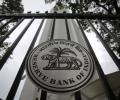
The Reserve Bank of India on Friday decided to keep the benchmark interest rate unchanged at 4 per cent but maintained an accommodative stance as the economy is yet to recover from the impact of the second Covid wave.

Undeterred by the stock market volatility, uncertainty due to the Ukraine-Russia war and high inflation, equity mutual funds continue to remain attractive choice for investors for the 15th straight month, registering a net inflow of Rs 18,529 crore in May on robust SIP numbers. This was higher than Rs 15,890 crore net inflow in April, data from the Association of Mutual Funds in India (AMFI) showed on Thursday. Equity schemes have been witnessing net inflow since March 2021, highlighting the positive sentiment among investors.

Stating that COVID-19 has not yet been contained in India, the rating agency in a statement said the government stimulus package is low relative to countries with similar economic impacts from the pandemic. "The COVID-19 outbreak in India and two months of lockdown -- longer in some areas -- have led to a sudden stop in the economy. That means growth will contract sharply this fiscal year (April 2020 to March 2021)," it said. "Economic activity will face ongoing disruption over the next year as the country transitions to a post-COVID-19 world."

The beneficiaries of the second set of announcements are expected to be micro, small, and medium enterprises, farmers, women, poor, migrant workers, and other marginalised sections of the society, reports Arup Roychoudhury.
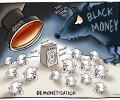
Demonetisation will help in transfer of resources from tax evaders to government, he said.

The biggest headwind to the consumption story in FY23 is a sharp decline in government subsidies on food, fertiliser and fuel, and overall decline in revenue expenditure net of interest payments. This, analysts say, will adversely impact purchasing power of households at the lower end of the income pyramid, translating into lower spending on consumer goods and services.

Lauding the farm sector for demonstrating resilience during the pandemic, the Economic Survey on Friday suggested the government to see farm sector as a "modern business enterprise" for which "urgent reforms" are required to enable sustainable and consistent growth. India's agricultural sector has shown its resilience amid the adversities of COVID-19 induced lockdowns, the Survey noted. The agriculture and allied activities were the sole bright spot amid the slide in GDP performance of other sectors, clocking a growth rate of 3.4 per cent at constant prices during 2020-21, it added. According to the Survey, the farm sector has got "renewed thrust" due to various measures on credit, market reforms and food processing under the Aatmanirbhar Bharat announcements.

The Reserve Bank's rate-setting panel began its three-day deliberations on Monday to decide the next monetary policy amid expectations that the central bank will maintain status quo on the benchmark interest rate in the backdrop of global scare due to the new coronavirus variant Omicron. Reserve Bank Governor Shaktikanta Das headed six-member Monetary Policy Committee (MPC) is scheduled to announce the policy resolution on Wednesday. If the RBI maintains status quo in policy rates on Wednesday, it would be the ninth consecutive time since the rate remains unchanged.

Spending continues to be less as people who are getting direct benefits from the government are choosing to save in the current situation.

Nepal's decision to ban the import of non-essential items amid depleting forex reserves may hit Indian exports. The country's central bank - Nepal Rastra Bank - last week instructed commercial banks not to open letters of credit (LCs) for importing non-essential items. This is to prevent further decline of the country's foreign exchange reserves. However, it has not issued any formal communication yet.

The McKinsey report said faster employment growth at 12 million non-farm jobs annually is needed in the post-Covid period till 2029-30, up from just four million created each year between 2012 and 2018.

Shaktikanta Das is a master of the finest balancing act who listens to all but takes his own decisions, discovers Tamal Bandyopadhyay.

But it is disappointing to note that Sitharaman's third Union Budget continues to promote a few problematic ideas, observes A K Bhattacharya.

The economic growth is likely to moderate to 6.1 per cent, slowest in over seven quarters, from 6.6 per cent last year same period.
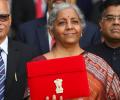
Had Finance Minister Sitharaman thought a little more about the middle class, disadvantaged sections, and the poor who are struggling, it would have been an inclusive Budget that would have made history, notes Ramesh Menon.

In years past, we often approached the Budget expecting to see changes in direct and indirect taxes. Those days are behind us. The Budget of today seeks to expand the economy and keep it at the forefront of technology, observes Harsh Goenka.

How do we get back to higher trend growth? The heart of the problem lies in private corporate investment, recommends Ajay Shah.

'It is not a matter of fixing the military problem up there in the Himalayas and the retreat of the two militaries.' 'India has to find a way to correct the racist and very patronising views of India in the Chinese mind.'

UBS, Credit Suisse see emerging markets doing well next year, but expect India to underperform, given its rich valuations.

The government's programmes should be expected to generate some momentum, but the macro-economic numbers are not encouraging, observes T N Ninan.

The IHS Markit India Services Business Activity Index stood at 5.4 in April, an extreme decline from 49.3 in March, and indicative of the most severe contraction in services output since records began in December 2005. As per the IHS Markit India Services Purchasing Managers' Index (PMI), a print above 50 means expansion, while a score below that denotes contraction.

When we look at the pension expenditure of the states, so far, there has been no gain from the NPS reform. Pension expenses as a share of total state revenue expenditure rose from 4% in 1991-1992 to 10% at the time of the NPS reform, and have risen further to about 12%, observes Ajay Shah.
India was already in the midst of a protracted economic slowdown before the virus hit due to a festering crisis among shadow lenders and declining consumer demand and private investment. Service sector activity in India is still effectively on hold.

To meet the revised estimates for 2019-20, the central government will have to garner Rs 5.03 trillion in total revenues in March, which has seen the worst phase of the coronavirus pandemic so far and the resultant lockdown.

India's services sector activity expanded at a slower pace in December as rates of growth in sales eased to a three-month low and staff hiring came to a halt amid weak business optimism, a monthly survey said on Wednesday. The seasonally adjusted India Services Business Activity Index fell from 53.7 in November to 52.3 in December. The index was above the critical 50 mark that separates growth from contraction for the third month in a row during December, but pointed to the slowest pace of expansion in the three-month sequence.

'We are at $2.7 trillion and 2024 is not far away.' 'The country will need to grow by 9% every year for 5 years continuously and raise the aggregate investment rate to 38% of GDP to achieve the government's target of turning India into a $5 trillion economy.' 'Given the fact that we are only growing at about 5% and our investment rates are only about 30%, it may take a number of years before we can reach that targeted level.'


Prime Minister Narendra Modi on Monday urged people to pledge not to do anything that lowers the dignity of women, saying a mentality to insult them in speech and conduct has crept in.
 © 2026 Rediff.com - Advertise with us - Disclaimer - Privacy Policy - Sitemap - Feedback - About us - Terms of use - Grievances